The League submitted testimony to the US House Committee on Administration hearing on the Make Elections Great Again Act. The testimony outlines several policies the League opposes that are contained in the legislation. The League will work to urge members to reject this anti-voter agenda.
Statement for the League of Women Voters of the United States
US House of Representatives
Committee on House Administration
Hearing: Make Elections Great Again Act: How to Restore Trust and Integrity in Federal Elections
February 10, 2026
The League of Women Voters of the United States (the League) shares grave concerns and strong opposition to the Make American Elections Great Again Act. This bill is not an attempt to secure our elections, but rather an attempt to make it harder for eligible Americans to register and vote, while also systematically making it harder for election administration officials to perform the tasks required to administer our elections. The League has been involved in the major policy fights to draft, pass, and implement the National Voter Registration Act (NVRA), the Voting Rights Act (VRA), and the Help America Vote Act (HAVA). We know pro-voter legislation when we see it, and the Make American Elections Great Again Act is not the solution we need.
The League is a 105-year-old nonpartisan nonprofit committed to ensuring that everyone is represented in our democracy. We are a grassroots organization comprised of over one million members and supporters in all 50 states and the District of Columbia across more than 800 local and state Leagues. The League focuses on advocacy, education, litigation, and organizing to advance our mission of empowering voters and defending democracy. We base our work on policy positions developed from multi-year studies and derived through consensus among League membership, to ensure our advocacy reflects best practices and a nationwide perspective.
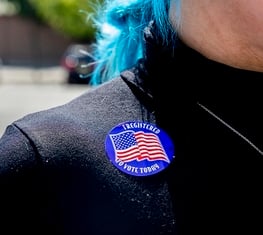
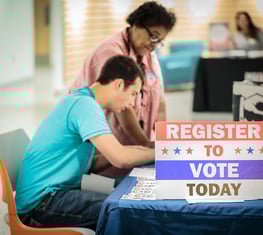
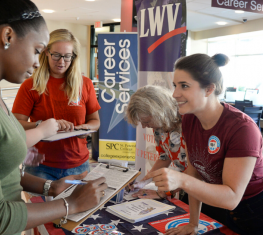
As one of the longest-running and largest, nonpartisan, volunteer-driven, voter registration organizations in the nation, the League brings deep, unmatched expertise around voter registration. In 2024, the League supported well over 400,000 people in registering to vote or updating their voter registration through in-person field voter registration events. Our leagues registered more than 70,000 young people at schools and colleges across the country; we also registered more than 90,000 new citizens at naturalization ceremonies. Our award-winning website VOTE411.org helps voters make a plan to vote by providing information to millions of voters every election cycle about what they need to take with them when they vote, where their polling locations are, and who is on their ballot. Elections can be complicated. The League helps make the voting process clear and accessible, ensuring people have the information they need to participate and make their voices heard.
The work the League does would fundamentally change if the Make Elections Great Again Act is implemented, and voters—and our country—would suffer. The following provisions are of greatest concern to the League.
Documentary Proof of Citizenship
The League opposed the inclusion of documentary proof-of-citizenship requirements when the NVRA was debated in 1989 and again before it was finally passed in 1993. A report from the Senate Committee on Rules and Administration in 1989 debated the issue fully and the committee findings in that report are still relevant: (1) the right of citizens in the US to vote is a fundamental right, (2) it is the duty of the federal, state, and local governments to promote the exercise of that right, and (3) discriminatory or unfair registration laws and procedures have a direct and damaging effect on voter participation in elections for federal office and disproportionately harm voter participation by various groups, including racial minorities.[1]
In 1993, Congress passed the NVRA with bipartisan support, but not before additional debate over documentary proof of citizenship was part of the conversation. The legislation passed without the provision in the conference process because it “would have eviscerated the mail-in registration provisions and stripped the bill of its uniform and nondiscriminatory components,” US Representative John Conyers (D-MI).[2]
Adding provisions requiring every eligible voter to provide documentary proof of citizenship, such as a passport or birth certificate, to register to vote could prevent millions of Americans from registering and casting a ballot. Currently, voters in every state are required to affirm or verify their citizenship status when registering to vote. The complicated, limited list of documentation this bill requires would create barriers to every eligible voter participating in our election process.
Every eligible voter— particularly rural voters, voters of color, and nearly 70 million married women who have changed their last names, and other voters who have been historically marginalized and already face obstacles in accessing the ballot box— would be unnecessarily burdened by this legislation at some point when they update or change their voter registration information.
Photo ID Requirements
The legislation also adds a photo ID requirement to cast a ballot, which is stricter than the voter ID requirements currently in place in every other state, except Ohio. The list of acceptable identification prohibits the use of student IDs, even when issued by a state-run institution, and requires the use of Tribal IDs that have an expiration date, which is not a common practice of tribal communities.[3] While voter photo ID laws aim to prevent in-person voter impersonation, an almost non-existent form of voter fraud, other types of voter impersonation are similarly rare and not cause for significant concern. Time and time again, voter photo ID laws are proven to be ineffective tools to fight voter fraud, in the rare instances it does take place. In fact, out of 250,000,000 votes cast by mail between 2000 and 2020, there were 193 criminal
convictions.[4] By those numbers, a person is more likely to be struck by lightning than they are to commit voter fraud. Further, measures are already in place to detect irregularities and investigate potential cases of voter fraud, making the need for further legislation even less.
Mail and Absentee Ballots
Provisions in this legislation would end universal mail voting and require any eligible voter who wishes to cast a ballot by mail to submit an application to request a mail ballot. Currently, in the US, eight states (California, Colorado, Hawaii, Nevada, Oregon, Utah, Vermont, and Washington) and the District of Columbia conduct elections entirely by mail.[5] These vote-by-mail systems allow voters to fill in their ballots during an election period and return them by inserting their ballot into a secrecy sleeve, then into a separate mailing envelope, signing an affidavit on the envelope, and returning the ballot through the mail or a designated drop box. If the provisions of this bill were to go into effect, it would fundamentally change the election systems for the states that conduct their elections in this manner. It would alter accessibility for voters with disabilities, rural voters, and force other voters to jump through hoops to vote in a way they have become accustomed. In states like Oregon, Washington, and Colorado, which have been voting by mail for over 20 years, this would require significant voter education and add an extra step for election administrators, which would take time and money to implement.
Voter List Maintenance Requirements
The League supports voter registration systems, including list maintenance practices, which are transparent, accurate, fair, and that identify and reach out to unregistered voters, but provisions in the legislation to enhance voter list maintenance greatly miss the mark.
Under current provisions in the NVRA, there is a quiet period of 90 days preceding a primary or general election.[6] This means that no voters may be systematically removed from a voter roll unless they specifically request it. This ensures that eligible voters can show up on Election Day, request or cast a mail ballot, or vote at an early voting location, and have their name listed on the voter roll. Provisions in this legislation that would end that practice could disenfranchise voters by removing them from the system, forcing them to cast a provisional ballot, or, worse, preventing them from voting at all.
General list maintenance is also required under the NVRA, but this bill requires states to conduct it every 30 days. This would create a burden on election officials. Having to cull through and verify the address and eligibility of every voter on the roll, which often contains millions of people, every month is not sustainable practice.
Voter Roll Data Sharing
Recent efforts by the federal government to consolidate data threaten to disenfranchise eligible voters, subject Americans to unwarranted investigations, and create unprecedented security risks by placing sensitive, personal information in a single target-rich system. The League has worked to block the efforts to operate these systems and to order the deletion of unlawfully collected data. At the center of this legislation's requirements is the Department of Homeland Security’s (DHS) Systematic Alien Verification for Entitlements (SAVE) system. The SAVE system is a national citizenship database pooling Social Security Administration data known to be unreliable. While it is currently being used by some states to purge voter rolls and open criminal investigations, it was not built to verify voter eligibility and is not an acceptable database for this type of oversight.
The League of Women Voters urges the Committee to REJECT the Make American Elections Great Again Act. Our democracy is strongest when eligible voters can register and cast their ballots securely, accessibly, and without unnecessary obstacles, and when election officials have the tools and resources to administer elections effectively. Voters do not need MORE obstacles in having their voices heard.
For questions, please feel free to reach out to our staff via Jessica Jones Capparell, Director of Government Affairs at [email protected] or Kristen Kern, Federal Policy and Advocacy Manager for the League of Women Voters of the US, at [email protected].
[1] US Senate Committee on Rules and Administration. (1989). Establishing National Voter Registration Procedures for
Presidential and Congressional Elections, and Other Purposes (S. Rept. No. 101-140). Government Publishing Office.
[2]https://www.votebeat.org/2025/03/31/proof-of-citizenship-law-trump-executive-order-elections-nvra/
[3]https://vote.narf.org/wp-content/uploads/2020/06/obstacles_at_every_turn.pdf?inline=1
[4]https://www.businessinsider.com/voter-election-fraud-statistics-rare-president-biden-trump-2020-2020-11
[5]https://www.ncsl.org/elections-and-campaigns/table-18-states-with-all-mail-elections
[6]https://www.justice.gov/crt/nvra-list-maintenance-guidance