October 27th is VOTE411's birthday! We're reflecting on some of our favorite moments in the nonpartisan voting guide's history.
The Voting Rights Act (VRA) is one of the most significant pieces of legislation in our nation’s history. It cleared the way for Black, brown, Asian American, and Native Voters to vote free from discrimination and established several protective provisions that were originally set to expire in 1970.
Yet, as voting discrimination continued, the government recognized the necessity of extending its once-temporary provisions. Ten years after the passage of the Voting Rights Act of 1965, the law was reauthorized for both the purposes of extension and a new provision ending literacy tests.
On August 8, 2026, LWV hosted a day of civic action, Unite and Rise for Voting Rights!
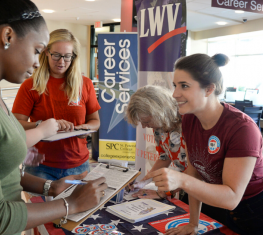
Hundreds of Leagues across the country hosted events centered on voter engagement, turnout, and education, emphasizing young voters and community partnerships.
On our nation's 250th anniversary, we remember that we the people are what makes America great.
On February 12, 2026, the Environmental Protection Agency (EPA) reversed its 2009 Endangerment Finding, which had allowed the agency to regulate greenhouse gas (GHG) emissions. This is a devastating decision as GHG emissions are the leading cause of climate change.
Throughout the first year of the 119th Congress, the League of Women Voters did advocacy work around legislation with significant implications for both our democracy and the people within it. This blog looks back at five of the most consequential legislative battles of 2025, as well as their implications for our country and the League’s 2026 advocacy work.
With the 2024 election in the rearview and critical midterms approaching, we took a look at the power of women at the ballot box using data from the US Census.
Women play a central role in that participation. As voters, organizers, community leaders, and advocates, women shape how democracy responds to the realities families and communities face every day.
When women vote, organize, and engage in public life, they influence the direction of policies that affect millions of people nationwide.
Since its founding, the people of the District have not enjoyed the same rights as other Americans. As a result, Washingtonians are expected to bear the burdens and duties of citizenship and obedience to the laws while having no say in their creation, a major inequity in a republic that purports to stand for liberty and justice for all.
This blog will examine the background of this inequality and feature the voices of LWVDC members and District residents who are currently undergoing illegitimate occupation by National Guard troops because of their lack of statehood.
After listing Louisiana v. Callais for reargument in the Fall 2025, term, the Supreme Court is set to test the constitutionality of Section 2 of the Voting Rights Act. This will have massive ramifications for election law.