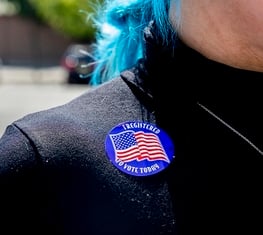
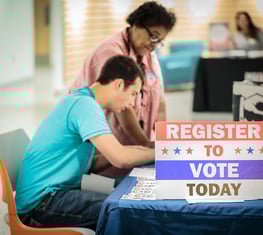
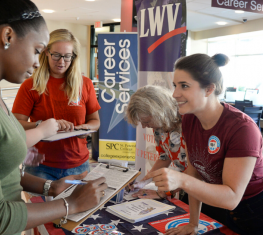

Cada año, aproximadamente 1,4 millones de hispanos se vuelven elegibles para votar. Además, el electorado latino es más joven que el promedio nacional: su edad promedio es de unos 37 años, casi una década menos que la del conjunto del país.
Cuando los jóvenes se registran y votan, no solo suman un voto más: llevan las historias de sus familias a las decisiones públicas. Un primer voto puede reflejar los sacrificios de los padres, la guía de un maestro y las esperanzas de una comunidad, y así convertirse en parte de la vida pública.
Independent agencies are key to maintaining stability during transitions between administrations. Their employees possess critical institutional knowledge that benefits the American people. Additionally, the independence of federal agencies provides an important check on presidential power.
Since the second Trump Administration began, an estimated 199,000 civil servants have left the federal workforce. This has had a major impact on independent agencies, or government agencies that are within the executive branch, but whose leadership cannot be removed at will by the president, unlike cabinet secretaries.
In moments of political uncertainty, concepts like the Insurrection Act or “martial law” can feel abstract – until they don’t. Given the current administration’s recent federal deployment of the National Guard in California and federal takeover of Washington DC, many are wondering: what is martial law? Does the president have the right to use military force in our cities? Are we on the brink of something more dangerous?
Student voters are increasingly powerful — boasting some 40 million eligible voters. However, students face a hidden threat to their right to vote: “Use It or Lose It” voter roll purging laws.
All 50 states, plus Washington, DC, and Puerto Rico, have their own supreme courts. How do they work?
Last June, I stood on the stage at our National Convention as the League of Women Voters announced me as the next CEO. For me, it was a moment filled with hope, pride, and a profound sense of responsibility. I knew I was stepping into a new leadership role at an organization with a rich history and an unwavering commitment to building a more perfect democracy.
Let’s be honest: We’re only talking about mid-cycle redistricting now because politicians fear losing power. And they’re willing to rewrite the rules to keep it.
On July 28, 2025, the League's CEO, Celina Stewart, Esq., joined the League of Women Voters of Chautauqua at the Chautauqua Institution for the Chautauqua Lecture Series, with the theme of "The Global Rise in Authoritarianism."
As we celebrate the 60th anniversary of the Voting Rights Act of 1965, legal intern Jayla Smith interviewed Chief of Activation and Justice Marcia Johnson about the law's impact and how we can ensure that its legacy continues.
In the age of unmonitored social media and AI, among other informational threats, it’s important to strengthen our media literacy. This helps us spot mis- and disinformation from people who may be trying to manipulate or distort our opinions on voting, democracy, and more.