
NOTE: This blog occasionally uses the terms “transgender,” “nonbinary,” and “gender nonconforming” in ways that appear interchangeable, though these terms have unique, nuanced meanings. Learn more here.
As transphobic ideology grows across the US, it’s vital that cisgender women stand in solidarity with our trans and gender-nonconforming allies.
In doing so, we must acknowledge the transphobia that has existed within the feminist movement, and how anti-democratic actors disguise transphobic policies in “pro-woman” rhetoric.
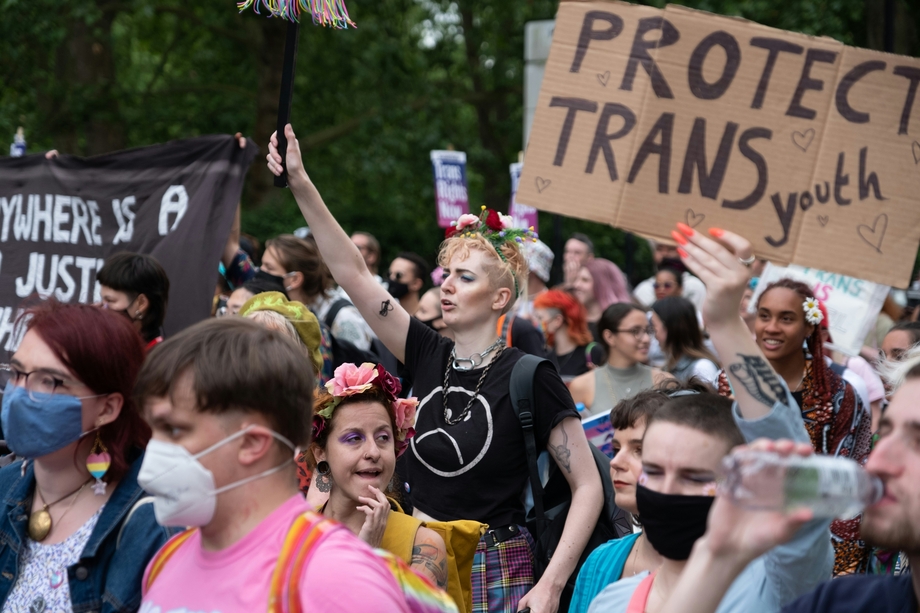
At their core, transphobia and misogyny are rooted in the same oppressive, gender-conformist beliefs.
Throughout history, the feminist movement has grown to become more inclusive; for example, through its acknowledgement and embrace of intersectional and antiracist perspectives. Now, we must go through a similar evolution to ensure that trans and gender-inclusive rights are represented in our work.
The term "women's rights" isn't just a singular concept; rather, it's an umbrella term for a movement that encompasses infinite experiences and identities, like income, race, gender, sexuality, and more. When we exclude any one of these communities by not making space underneath the umbrella — even unintentionally — we undermine everyone.
Stay Updated
Keep up with the League. Receive emails to your inbox!
Through self-education, political advocacy, unwavering allyship, and support for organizations that fight for transgender and gender non-conforming rights, we can dismantle transphobia and create a better nation for people of all gender identities.
Evolving Inclusivity in the Feminist Movement
The history of feminism and voting rights, including the early days of suffrage, is a history of both empowerment and discrimination.
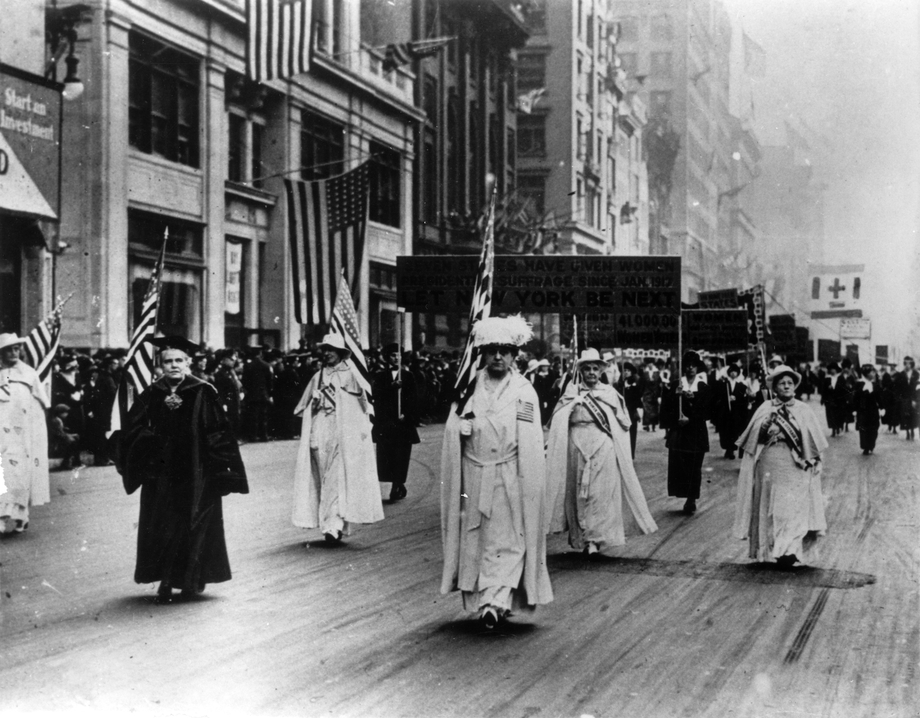
Therefore, evolving to become more inclusive is an ongoing, essential part of the women’s rights movement.
Racism in the women’s suffrage era is a prime example. The early 20th century often found white suffragists promoting their rights at the expense of the Black community. As a result, the movement was cut at the knees, with many opportunities for unity rejected. Consequently, the 19th Amendment, transformative as it was, only granted some women the right to vote.
The country will suffer the consequences of past discrimination for decades to come.
League leaders have openly discussed this part of suffragist history and how we’ve made the active choice to move past it to become an openly anti-racist organization. As an organization, we had (and still have) a choice: dig in our heels, or acknowledge the problems of white supremacy and work to dismantle it. The League, and the movement at large, has chosen the latter, and we’ve become infinitely stronger for doing so.
Where would our movement be today if it didn’t acknowledge the formative contributions of the Haudenosaunee women who laid the foundations for suffrage, or women like Fannie Lou Hamer and (League member!) Shirley Chisholm who laid everything on the line for civil and voting rights? No matter your political beliefs, how powerful was it to see Kamala Harris become the first Black, Asian woman to become Vice President, and then the first female Presidential nominee backed by a major party?
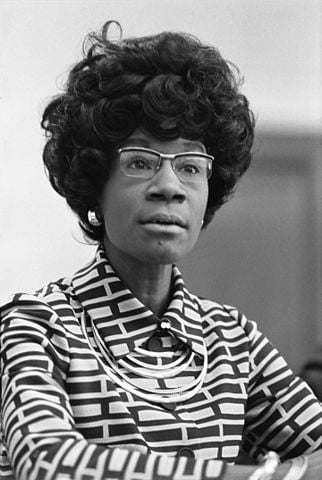
Activist and LWV member Shirley Chisholm
The League itself is committed to antiracism, as exemplified by its legal work fighting racial discrimination in voting and supporting immigrant rights and birthright citizenship. We are proudly led by a Black woman, CEO Celina Stewart, Esq. — something many early suffragists wouldn’t have imagined. It’s remarkable how far we’ve come in the past century.
That’s not to say that racism within the feminist movement has been “cured.” White feminism, or feminism that is focused on the needs of white women, is something we must constantly battle. What history has shown us is that we’re equipped to take on that battle, and that we must do so.
This is true for racism. And it’s equally true for transphobia.
Transphobia Within the Women’s Rights Movement
While no two movements are the same, there are many parallels between the exclusion of Black people and the transgender and nonbinary communities within certain branches of the women’s rights movement.
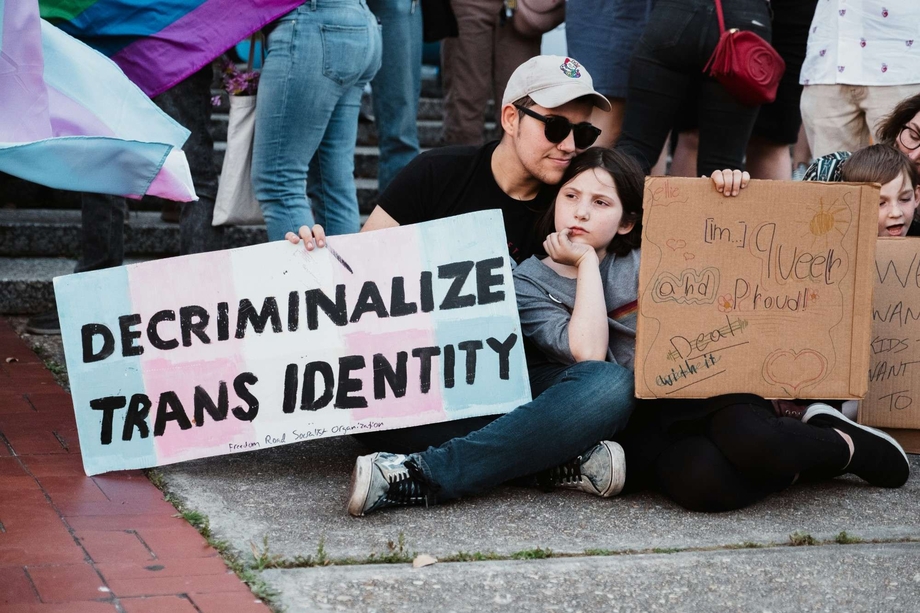
You may be familiar with the term “TERF,” which stands for “Trans-Exclusionary Radical Feminist.” It refers to people who consider themselves feminists but reject the idea that transgender women are “real women” and oppose their inclusion in the women’s rights movement. The “Harry Potter” author J.K. Rowling is perhaps the most famous example of a “TERF” because of her extensive history of anti-trans language online and in her novels.
Because the term “TERF” now has such a negative connotation, people with these beliefs may label themselves "radfems/radical feminists," “gender critical,” or even “pro woman.” The latter term is particularly striking; why is there an overlap between equal rights advocacy and transphobic beliefs? In part, this is the result of a strategic move on the part of anti-trans advocates to exploit fear and misogyny to their benefit.
They posit that women’s safety and wellbeing — especially girls’ safety and wellbeing — are in opposition to trans rights.
You’ve probably seen these arguments around:
- School Sports: “Gender critical” advocates claim that allowing transgender women to compete in sports gives them an unfair advantage. In reality, “a meta-analysis of 52 studies suggests that transgender women’s physical fitness after hormone therapy is comparable to that of cisgender women.”
- Bathroom Access: Anti-trans actors argue that allowing transgender people to use bathrooms that align with their gender identity will allow cisgender men to pretend to be trans and use women’s bathrooms to prey on young girls. However, not only do studies show no evidence of this being the case, but they actually indicate that transgender people are the most at risk in single-sex spaces.
- Children’s Health: Transphobic advocates falsely claim that gender-affirming care harms children’s minds and bodies, when studies actually show that it “improves the mental health and overall well-being” of gender-diverse children.
Claims that trans rights are in opposition to "women's rights" are both incorrect and damaging. By falsely equating the oppression of one minority to the empowerment of another, we weaken the fight for women’s rights as a whole.
The Growth of Anti-Trans Policies and Legislation
Alarmingly, the anti-trans movement, both in and out of feminist spaces, is growing.
This shift coincides with a surge in legislative and administrative attacks on the transgender community, in alignment with the current federal administration. In 2025, the federal government rescinded all existing federal policies protecting transgender people from discrimination, deleted CDC public health research and guidance about transgender people, and denied transition-related healthcare to federal employees, among many other transphobic policies.
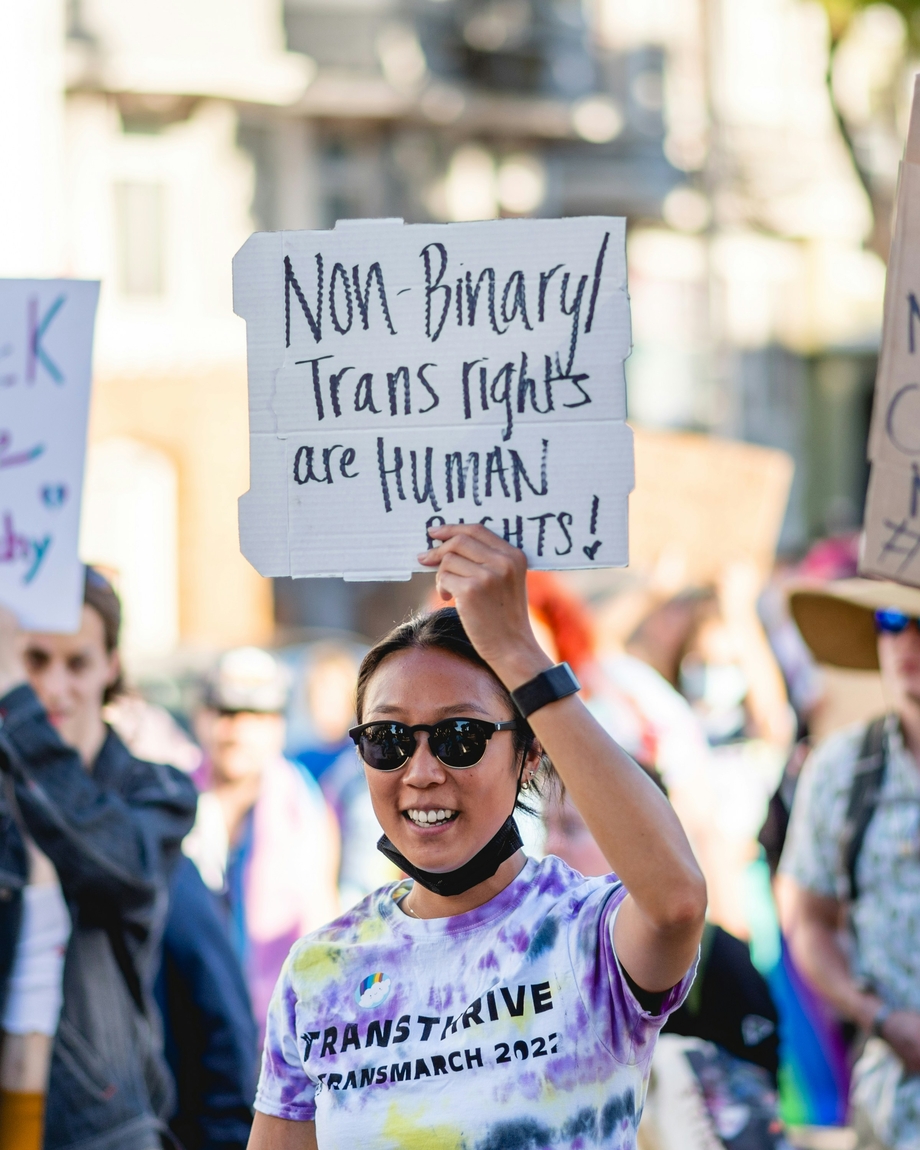
Currently, Congress is being pushed to bring the SAVE Act to the floor, legislation that “would suppress transgender voters by forcing them to provide updated documentation (since their name may not match their “deadname,” the name they were given at birth, on their birth certificate or passport).” Many states also recently implemented changes requiring transgender people to update their gender markers on their government ID, a task that is often arduous and confusing.
Transphobia is an Attack on Democracy and Women’s Rights
The surge of anti-trans policy is an attack on democracy itself. A key characteristic of a healthy democracy is that it protects the rights and uplifts the voices of minorities and other vulnerable populations. In fact, studies indicate that anti-trans and anti-LGBTQIA+ rhetoric often coincides with “democratic backsliding” and rising authoritarianism.
It also, as we can see in the current administration, coincides with the degradation of women’s rights as a whole. In addition to suppressing transgender voters, the SAVE Act would make it more difficult for married women to cast their ballots. The same Supreme Court that overturned Colorado’s ban on conversion therapy also eliminated affirmative action and reproductive rights, two issues that overwhelmingly impact cisgender women alongside members of the transgender and gender-nonconforming communities.
And so is our oppression. Many of the same values or tactics used to discriminate against transgender people are the same as those used to oppress all women. For example:
- “Traditional” values and gender norms: “Traditional values” tell us that people and families should conform to specific roles based on their gender. They leave no room for gender identities that exist outside of a binary, male/female system, and generally do not respect transgender identity. They also insist that women are domestic and submissive and must dress and behave in certain ways.
- Body Policing: Attacks on reproductive rights and gender-affirming therapy, or laws that dictate which bathrooms you can use based on our genitalia, are all forms of body policing that target minority populations. However, bans around cisgender men’s reproductive rights and gender-affirming treatments (such as the right to receive a vasectomy or the use of medication for erectile dysfunction or hair loss) do not exist.
- Anti-DEI: Both feminism and transgender rights are pillars of DEI (Diversity, Equity, and Inclusion) that have been attacked by the current administration. Opponents of DEI often claim that equitable solutions to longstanding discrimination against groups like women and gender-nonconforming people unfairly prioritize them over others (namely, white, cisgender men).
Activists cannot support transphobic beliefs without promoting the very ideals that oppress all women. To put it in a more optimistic light: by dismantling transphobia, we dismantle misogyny.
How the League is Fighting Transphobia
The League of Women Voters stands firmly against all attacks on the transgender community and is committed to supporting equal rights for all under state and federal law, regardless of identity, including sex, gender, and sexual orientation.
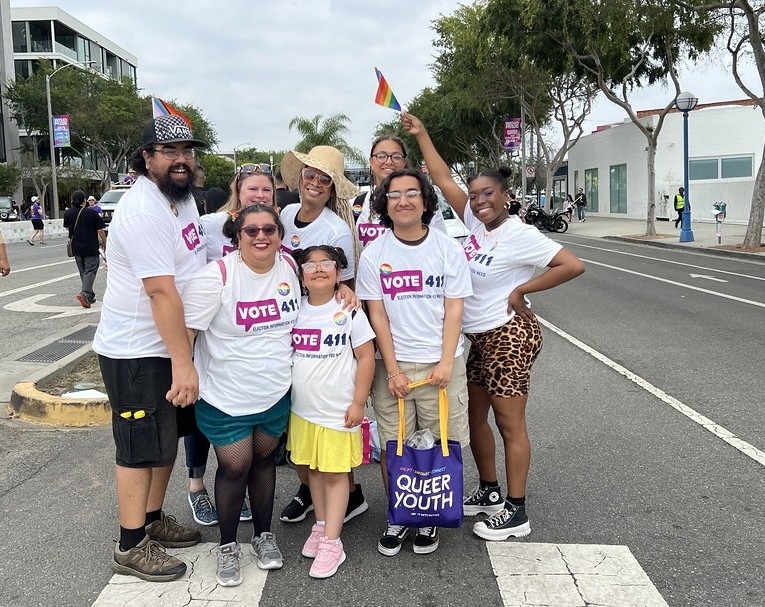
We’re fighting for the rights of trans and nonbinary people on many fronts, including:
- Legal: Both nationally and statewide, the League is tracking and actively engaged in legal cases centered on discrimination against the transgender and nonbinary communities, such as Hecox v. Little.
- Advocacy: The League strongly opposes Voter ID laws that disproportionately impact gender non-conforming people, such as the SAVE Act.
- Partnership: LWV is proud to partner with organizations dedicated to promoting LGBTQIA+ rights, such as PFLAG.
- Speaking up: The League will continue to be loud about the importance of LGBTQIA+ through blogs, social media, and all aspects of our work.
Want to know how your local League is supporting the transgender and nonbinary communities? Contact them today!
How To Support Trans and Gender-Nonconforming People
There are many ways to get involved! Below are just a few.
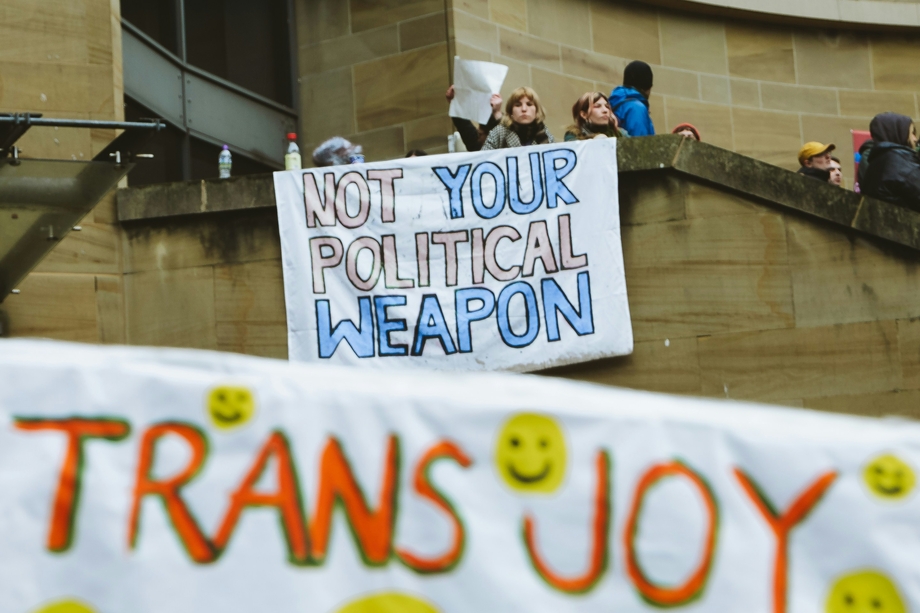
Educate Yourself and Others
Many of us don’t know how to talk about transgender and gender nonconforming identity. The use of pronouns, or even the meaning of terms like cis- and transgender, may confuse us. That makes sense — while gender nonconformity has always existed, these terms didn’t come into popular use until the 1990s and early 2000s. Even as someone who was actively involved in LGBTQIA+ advocacy in the early 2000s, I can remember getting into the 2010s and having to look up “what does cisgender mean.”
There’s no shame in not knowing something or making mistakes. The real shame is in not trying to learn. You can find great resources to learn more about transgender identity and how to support your gender nonconforming loved ones from PFLAG.
Advocate for Transgender Rights
In 2026, 797 anti-trans bills have been introduced across the country. Find out if this is happening in your state with the anti-trans bills tracker, and then write to your representatives.
Be An Ally
Show people that you are unabashedly an ally. This may look like:
- Speaking up when you hear transphobic rhetoric
- Putting your pronouns in your email signature or social media bio
- Attending a Pride event
- Putting up a yard sign or adding a pin to your backpack showing support for the trans community
- Sharing resources that educate the public and empower gender-nonconforming people
Supporting Organizations That Fight for Trans Rights
This may look like a mutual aid fund or state-specific organization, or a nationwide group like the Transgender Law Center, the Human Rights Campaign, or the National Center for Trans Equality.
If you’re a member of your local League, you can also ask them what they’re doing to support transgender people and encourage them to get involved in local pro-LGBTQIA+ advocacy or partner with local trans-rights organizations.
Last year, we wrote that there is no true democracy without trans rights. This year, we’re taking it a step further.
This is an urgent moment in the history of each movement. Once again, I’m reminded of how the women’s movement was forced to reckon with its internalized racism post-suffrage (a reckoning that is ongoing). We were forced to make a choice: remain complicit in the oppression of Black and brown voters or evolve to build a more inclusive, powerful movement.
We chose the latter once before. Now, we are called to do so again.
The League’s decision is clear. We choose to evolve. Just as we became an explicitly anti-racist organization, we are also one that unequivocally stands for transgender and gender non-conforming rights.
Will you join us?