This blog was written by former legal intern Jake Silverman
The Voting Rights Act (VRA) is one of the most significant pieces of legislation in our nation’s history. It cleared the way for Black, brown, Asian American, and Native Voters to vote free from discrimination and established several protective provisions that were originally set to expire in 1970.
Stay Updated
Keep up with the League. Receive emails to your inbox!
Yet, as voting discrimination persisted, the government recognized the need to extend its once-temporary provisions. Ten years after the passage of the Voting Rights Act of 1965, the law was reauthorized for both the purposes of extension and a new provision ending literacy tests.
What is Section 203?
The 1975 reauthorization of the VRA introduced Section 203, which expanded the Act’s coverage to citizens who needed language assistance. Congress identified a long history of education discrimination against language minority populations, leading to “high illiteracy and low voting participation” rates.
They found discrimination to have particularly impacted Spanish speakers, as well as people who spoke Asian, Native American, and Alaska Native languages. For example, 40-45% of the adults in the Rio Grande Valley in Texas spoke only Spanish. Hispanic citizens reported barriers including poll workers’ inability to locate their names on voter rolls and physical and economic hostility from poll workers, registrars, law enforcement, and even employers, who would threaten their employment if they voted.
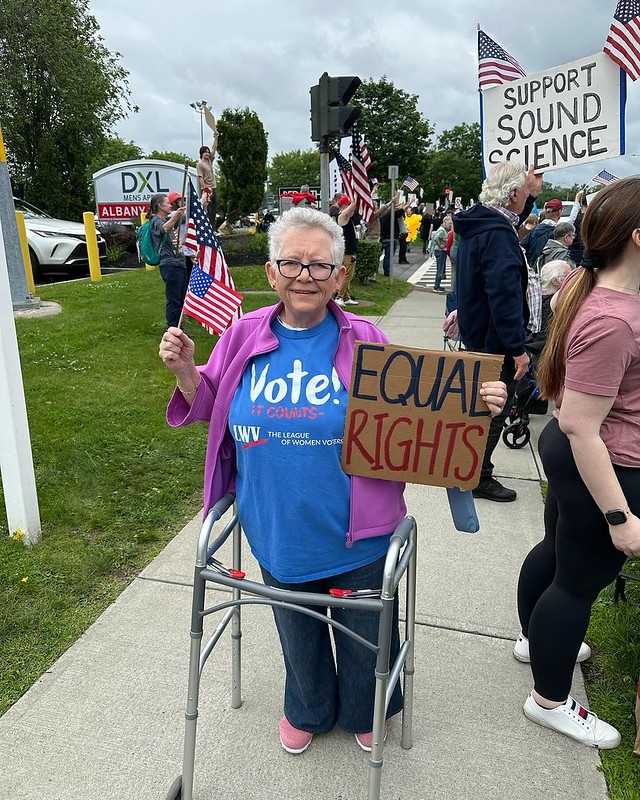
To remedy this inequality, and in response to successful advocacy by a coalition that included the League, Congress enacted Section 203, which required all election-related materials (ballots, forms, instructions, notices, etc.) in certain jurisdictions to be translated into those covered languages, prohibiting officials from conducting English-only elections. Unlike most other provisions of the VRA, which protect against discriminatory practices that push people out of the electoral process, Section 203 actively works to bring people into it.
For that reason, the League has consistently pushed for full compliance with Section 203. Yet in the past several years, certain factions, like the Trump Administration, have moved us further and further away from the VRA and pro-voter legislation.
Who is Covered by VRA Section 203?
Section 203’s protections apply to any state or political subdivision (county, city, town) in which at least 5% of voting-age citizens (or 10,000 total, as of 1992) are limited-English proficient (LEP) in a covered language and have an illiteracy rate higher than the national average (here, “illiterate” is defined as having failed to complete the fifth grade).
Section 203-covered jurisdictions are required to provide ‘‘any registration or voting notices, forms, instructions, assistance, or other materials or information relating to the electoral process, including ballots’’ in written form if that material is provided in English, as well as both written and oral language assistance at polling locations as needed. However, jurisdictions must assess voters’ need for accommodations and develop compliance plans.
The list of Section 203-covered jurisdictions is set to be updated at the end of 2026. As of this blog's writing, 331 jurisdictions are covered under the 2021 determinations, including the complete states of California, Texas, and Florida, a 26% increase from 2016. Jurisdictions can be covered for multiple languages; for example, Los Angeles County triggered Section 203 for six distinct languages, though state law and local practice mean Los Angeles County translates its election materials into 18 languages.
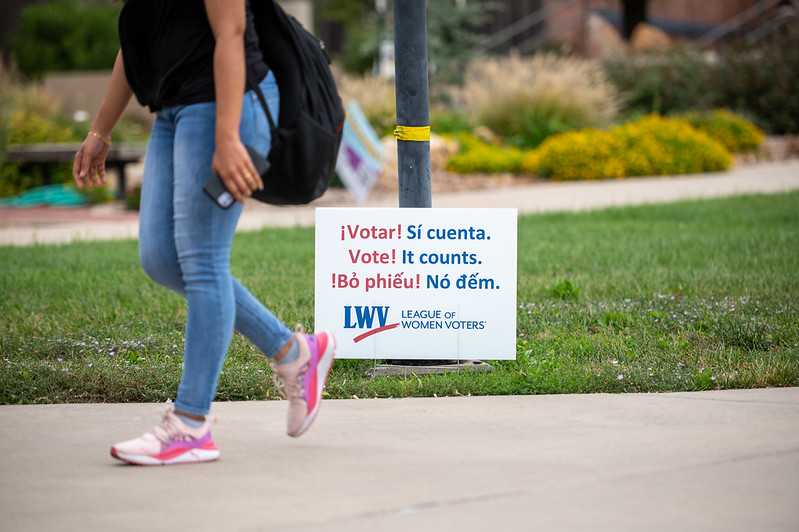
Nationally, more than 24 million LEP citizens live in jurisdictions covered by Section 203, a 22.3% increase from 2016. 30 states have at least one jurisdiction covered by Section 203, many of which are triggered by the need for Spanish-language materials, though the number of jurisdictions triggering coverage for Asian languages is increasing.
Is Language Assistance Effective?
Providing translated materials meaningfully improves turnout for language minority citizens. Latino turnout increases roughly three percentage points more in Section 203 covered jurisdictions, while AAPI turnout increases by more than six percent. This increase persists even in jurisdictions that have been covered by Section 203 for long periods of time.
Even small efforts to increase outreach can have massive impacts: one jurisdiction reported sending a postcard to all registered voters asking if they wanted their ballot in a covered language. Doing so increased the jurisdiction’s requests for translated ballots more than fivefold.
How is Section 203 enforced?
The Department of Justice is primarily responsible for ensuring election officials respect their citizens’ right to a language-inclusive election, though citizens can sue to vindicate their own right to translated election materials. Federal regulations do not require that translated materials be provided for every voter; they can instead be provided in a “targeted” manner to those who need them. Proper compliance with the law requires consultation “with members of the applicable language minority group with respect to the translation of materials.”
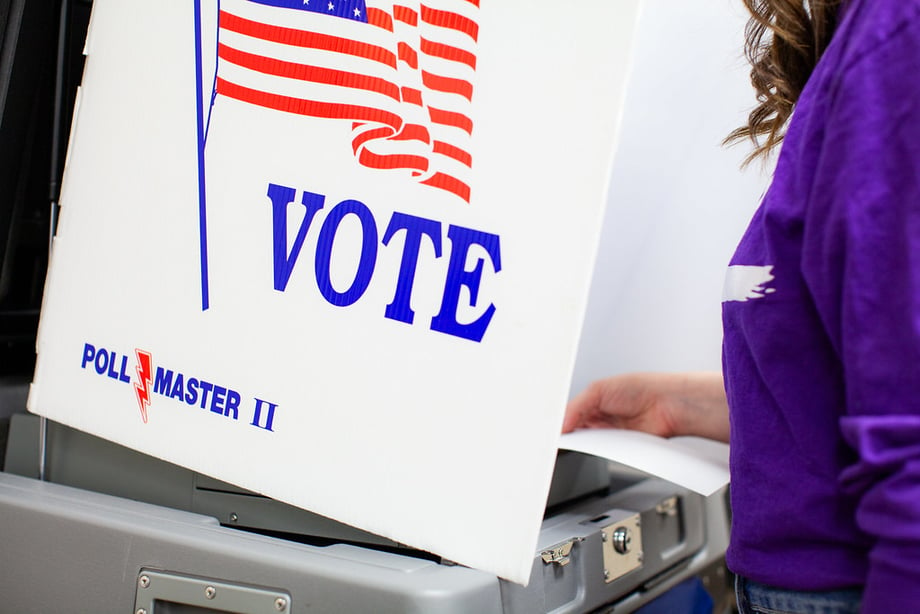
Unfortunately, significant barriers often stop voters from getting the assistance they are legally entitled to. Indeed, for decades after the enactment of Section 203, jurisdictions lagged in fulfilling their duties.
A study released in 2007 after the last authorization of the Voting Rights Act revealed these deficiencies. Fewer than 70% of jurisdictions surveyed required under Section 203 to provide Spanish assistance complied fully with this obligation. In fact, more than 13% of jurisdictions provided no assistance at all.
For jurisdictions covered for Asian languages, the situation was worse: only about 40% of jurisdictions self-reported as providing both oral and written language assistance. And fewer than 40% of jurisdictions provided assistance by phone in all covered languages.
Fewer than half of Section 203-covered jurisdictions provided oral assistance for voter registration, polling place changes or check-in, or the use of voting machines. Only 7% provided oral language assistance for voters purged from voter registration lists, potentially leading to the removal of otherwise-eligible LEP voters from the rolls solely because of their language status.
Even for written materials, only two-thirds of jurisdictions translated more than half of their election materials. And because one of the requirements to trigger Section 203 coverage is a higher-than-average illiteracy rate, relying on written materials often does not meet the needs of the population. Similarly, fewer than 20% of jurisdictions used bilingual poll worker recruitment materials, further exacerbating the lack of oral assistance.
Why Do Jurisdictions Fail to Fulfill Section 203?
Generally, noncompliance with Section 203 occurs because of insufficient resources, including shortages of bilingual/multilingual election workers, or a lack of awareness of the law’s requirements. A spring 2008 report written shortly after the last reauthorization of the Voting Rights Act found that providing translations often took less than 3% additional spending of a jurisdiction’s election administration spending.
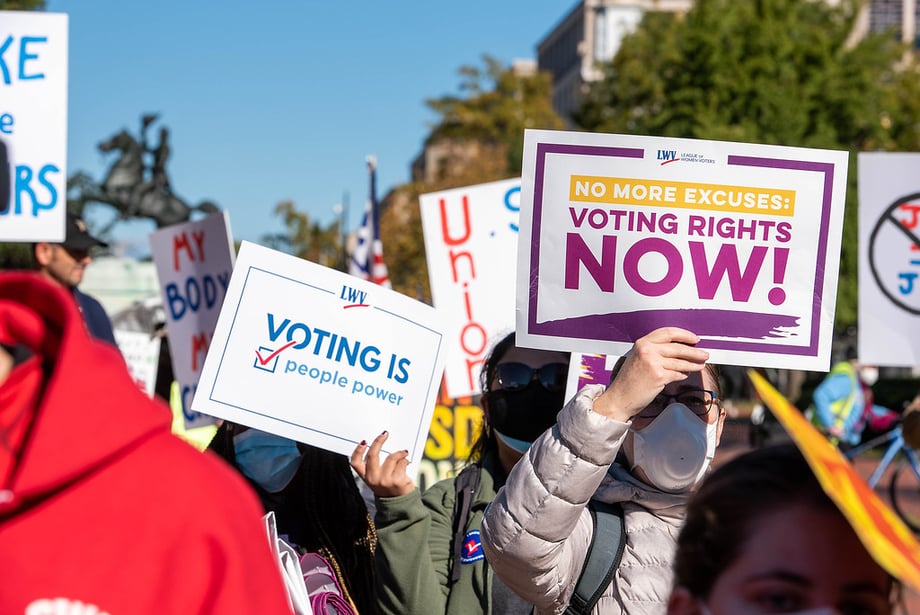
Proper coordination with local community leaders from the language minority group can reduce costs by identifying more volunteer translators and poll workers, which can also ensure translations are sensitive to cultural or dialect needs (for example, ensuring that Mandarin Chinese-speaking translators are not sent to a Cantonese-predominant precinct). However, nearly two-thirds of covered jurisdictions do not engage in outreach and consultation with community organizations.
Poorly trained poll workers are also a significant barrier to full Section 203 compliance, ranging from ignorance about the specifics of the assistance and resources voters are entitled to to making discriminatory remarks about limited English proficiency (LEP) voters.
How Can We Strengthen Section 203?
The League has consistently worked to oppose “English-only” legislation that would effectively repeal Section 203. Through these efforts, LWV and partners prevented multiple serious Congressional efforts in the late 1990’s.
To get involved in pro-voter work, search our 800+ state and local Leagues.
The 2006 VRA reauthorization extended Section 203’s protections until 2032. Section 203 and its benefits can be improved through stronger Department of Justice enforcement and through Congressional action.
Sadly, it's clear that the Trump Administration is at best deprioritizing, if not abandoning, enforcement of Section 203. On March 1, 2025, President Trump issued Executive Order 14224, “Designating English as the Official Language of the United States,” which also repealed a Clinton-era Executive Order improving assistance to LEP Americans.
This is particularly problematic because the cost of VRA litigation makes it difficult for anyone outside of the Department of Justice to fight language discrimination. The relative dearth of lawsuits against noncompliance likely contributes to both election administrators’ lack of awareness of the law’s requirements and low urgency to fully comply. The Department of Justice filed precisely zero Section 203 cases between 2012 and 2023 and reached only one settlement in that same period. The DOJ has filed only nine since the end of the second Bush Administration. Even accounting for consent decrees, these efforts were insufficient to put other jurisdictions on notice to comply with Section 203.
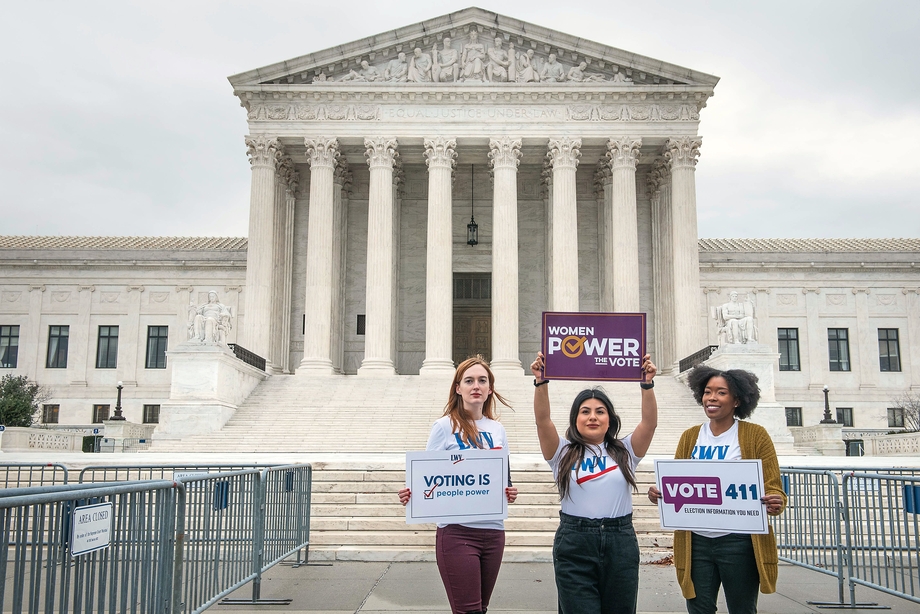
Currently, the Department can only respond to violations that have already occurred. Congress needs to act to strengthen Section 203 to proactively bring more people into the political process and prevent violations. To address these problems, the League of Women Voters of the United States endorsed the Expanding the Voluntary Opportunities for Translations in Elections (VOTE) Act introduced by Rep. Nikema Williams (D-GA) and Sen. Alex Padilla (D-CA). Notably, this legislation received broad bipartisan support when it was initially considered by the Judiciary Committee in 2022.
The Expanding the VOTE Act
The Expanding the VOTE Act strengthens Section 203 by modernizing its numeric and language triggers and closing critical loopholes. First, it clarifies that Section 203’s requirements cover online written materials along with printed ones and affirms that Section 203’s guarantee of bilingual election materials is an individual right and not just an obligation of the covered government.
In doing so, it addresses situations where a state government provides English-only election materials statewide but doesn’t translate those materials for LEP voters who live in a covered county; situations like this currently create a catch-22 where the covered county cannot be held accountable because they had no involvement in the materials, and the state cannot be held accountable because they are not subject to Section 203’s requirements.
While Section 203’s initial list of covered languages was responsive to the language minority groups that Congress found to have experienced education discrimination up to the mid-1970’s, it has not been updated to include modern language minorities. Most notably, LEP voters who speak Arabic and Haitian Creole are left off the list, in part because the Census Bureau does not classify Arabic as an “Asian” language.
Similarly, Congress has not reexamined the 5% trigger threshold, despite modern technologies making translating materials easier, except to add the 10,000 persons trigger in 1992. Thus, the Expanding the VOTE Act tasks the Government Accountability Office, Census Bureau, Department of Justice, and Election Assistance Commission with analyzing the impact of lowering the trigger thresholds so that Congress can effectively update Section 203. The bill also modernizes how the law handles historically unwritten Alaska Native and American Indian languages.
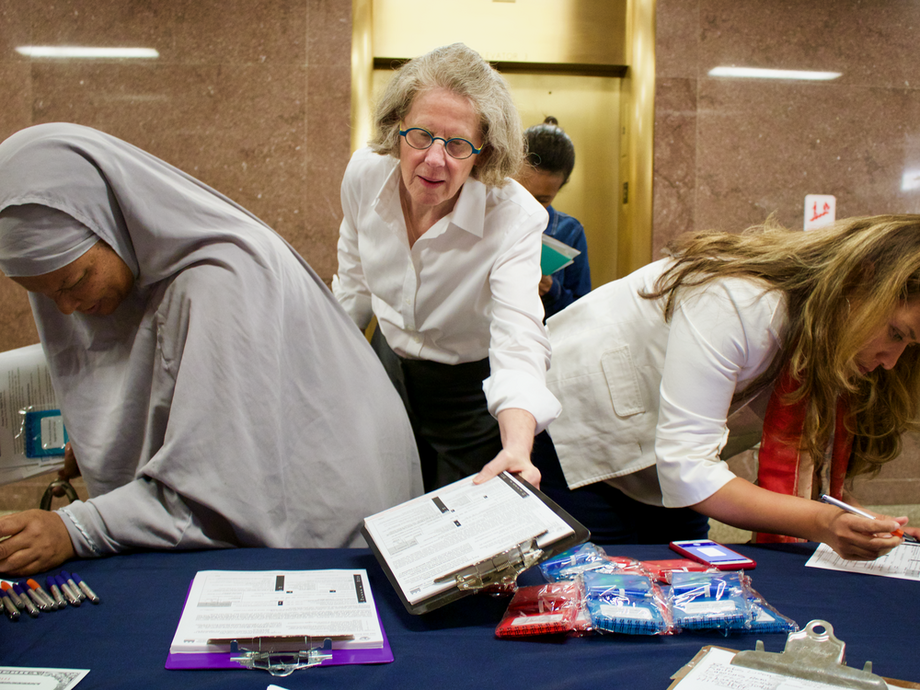
And perhaps most importantly, the Expanding the Vote Act establishes a voluntary grant program for jurisdictions that want to go beyond the statutory requirements in providing translated ballots. So, if a jurisdiction has triggered coverage for Spanish, the grant could not cover its Spanish translation, but if that jurisdiction also wants to produce materials in Korean or Arabic, the federal government would pick up the tab. This would make clear that, even if their population is not large enough to trigger Section 203 coverage, those language minority citizens are welcome and included in our democracy.
Fifty years ago, Congress enacted Section 203 of the Voting Rights Act to speak clearly against discrimination and in favor of a democracy that welcomes all eligible citizens to cast their ballot and have their voice heard. And Section 203 has led to significant strides in political involvement for language minority citizens, especially Latino, AANHPI, and Native/Indigenous citizens. But enforcement and compliance can be lax. It is time for an Administration that makes Section 203 enforcement a priority and for Congress to modernize the provision with the Expanding the VOTE Act.
Call your Member of Congress to support the Expanding the VOTE Act (HR 4917) and urge them to support the John Lewis Voting Rights Advancement Act to proactively include all citizens in our elections.