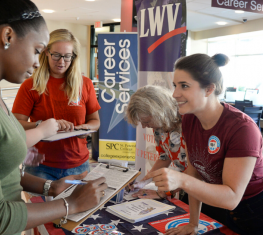

In Spring 2026, I volunteered with my local League, LWV of Greater Pittsburgh, to register currently incarcerated eligible voters at our county jail ahead of the primary elections. I learned more about voting rights for currently incarcerated individuals (sometimes referred to as "returning citizens"). I also learned about their voter eligibility and the barriers that formerly and currently incarcerated voters face.
The League partnered with civil rights attorney and disability rights advocate Britt Belwine to create a message about the challenges faced by voters with disabilities and how tools like absentee ballots can empower voters.
In light of the Supreme Court’s many controversial decisions in recent years, many people have called for its expansion. The desire to expand SCOTUS is rooted in the hope that doing so would allow the appointment of judges who are more aligned with the desires of the people.
We’ll review the history of court packing, why it hasn’t been successful, and what lessons we can learn from past attempts.
On our nation's 250th anniversary, we remember that we the people are what makes America great.
At their core, transphobia and misogyny are rooted in the same oppressive, gender-conformist beliefs. As transphobic ideology grows across the US, it’s vital that cisgender women stand in solidarity with our trans and gender-nonconforming allies.
Throughout history, the feminist movement has grown to become more inclusive; for example, through its acknowledgement and embrace of intersectional and antiracist perspectives. Now, we must go through a similar evolution to ensure that trans and gender-inclusive rights are represented in our work.
It’s Juneteenth. Today, we honor the emancipation of the last enslaved Americans and recognize the painful history, extraordinary resilience, and generations of activism that made that moment possible. It’s a celebration that’s not only historic, but for many (like myself), deeply personal.
But in a moment when civil and voting rights continue to face challenges, and even efforts to acknowledge our full history through initiatives like Diversity, Equity, and Inclusion (DEI) are viewed as controversial, Juneteenth invites a larger question: what does this day mean? What does it symbolize for our democracy and for each of us, regardless of race?
As a parent, I’m deeply invested in the future, not in the abstract, but for the very real humans I’m raising. And I often find myself asking hard questions: how do I advocate fiercely for my children's futures while still being present in their childhood? How do I teach them about injustice without convincing them that the world is unsafe? How do I talk to them about activism without passing down the anxiety I feel every day?
In March 2026, the Supreme Court determined that Colorado’s Conversion Therapy ban violated the First Amendment, in a major loss to LGBTQIA+ rights.
Colorado moved quickly on two fronts: maintaining protections for youth in a way consistent with the First Amendment and strengthening accountability for past harm.
Make sure your grad is ready to make their voice heard as they step into the world with these VOTE411 postcards!
On April 29, the Court issued its opinion in Louisiana v. Callais. In a 6-3 ruling, the Court weakened Section 2 of the Voting Rights Act (VRA), which prohibits any voting rule or procedure that discriminates on the basis of race, color, or language minority status, to the point of inoperability. This sends a clear message to the nation: racial discrimination in redistricting is acceptable when done under the guise of partisan gerrymandering.